
From Zero to AI Search Visibility: How to Increase Impressions in AI Search. Presta + CopyBeats Case Study
-
Presta, a startup studio focused on building and scaling early-stage ventures, struggled with blog visibility and discoverability.
-
After adopting CopyBeats six weeks ago, they consistently published SEO-friendly content tailored for both AI and humans.
-
Their impressions skyrocketed — from low hundreds to thousands — in less than two months according to Search Console data.
-
Their content began being quoted in Perplexity and ChatGPT responses, indicating real AI search visibility.
-
This case shows how founders can increase impressions in AI search by combining consistent publishing with structured, humanized content creation.
-
If you want similar outcomes, it’s worth testing CopyBeats to see how it can fit your own content strategy.
Who is Presta and Why AI Search Visibility Matters
Presta is a startup studio that helps early ventures go from idea to product and market fit. Startup studios like Presta juggle product development, hiring, investor engagement, and more, but often lack the team or rhythm for consistent content production. For an organization that builds companies, visibility is more than vanity: it’s trust, domain authority, partner interest, and early user pull. Most traditional SEO and organic content strategies don’t account for the growing presence of AI-driven discovery tools, generative engines such as Perplexity, ChatGPT, and Google’s AI Overviews, that increasingly answer queries directly from their data sources rather than a list of links .
When a searcher asks an AI tool for “what a startup studio does” or “how to build a startup,” they may get an on-the-spot summary that pulls from the most semantically clear, authoritative, and structured content available. This signals a shift in how visibility works online: being ranked on page one of Google isn’t enough anymore. You need to appear in AI search answers and citations to be found where users increasingly start their research.
What CopyBeats Is and How It Fits In
CopyBeats is a writing assistant designed for founders and small teams. It’s built to help you Grow Your Website Traffic and LinkedIn Following Without the Awkward Self-Promo. The platform writes blogs people actually read and LinkedIn posts that don’t make everyone’s eyes roll, and it optimizes them for both organic search and the kinds of structured clarity that AI engines value. SEO loves it. AI finds it. Your audience follows it.
At its core, CopyBeats helps founders move from sporadic posts to a consistent publishing cadence by turning raw ideas, product insights, and founder wisdom into searchable, useful content. Instead of spending hours drafting posts from scratch, Presta used CopyBeats to generate high-quality drafts and then edit them into final form, preserving human voice while distributing content more reliably.
The Situation Before CopyBeats
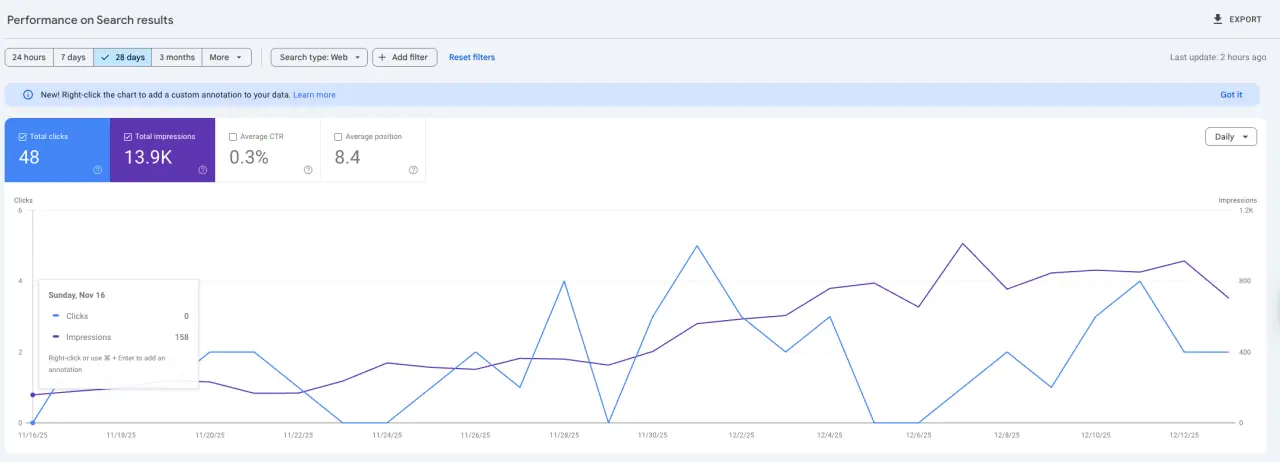
Before adopting CopyBeats, Presta had a blog that existed mainly as a home for sporadic posts. The team struggled to maintain a rhythm, and according to Google Search Console, their overall impressions were modest: daily impressions often stayed below a few hundred, with occasional spikes but little overall trend. The content was generally helpful, but it lacked structure that AI search engines could parse easily and frequency that established topical authority.
Google Search Console (Before)
-
Traditional Google SEO was slow and unrewarding.
-
AI search engines weren’t consistently pulling Presta content into answer summaries or citations.
With Google’s shift toward AI Overviews and answer engines that synthesize content into responses, content that just “ranked” was often ignored by AI tools because it didn’t present direct answers with structured clarity, something modern AI visibility strategies now prioritize .
This visibility gap laid the groundwork for a new experiment: could structured, founder-authored content, published consistently, earn traction not just in traditional search but inside AI responses?
The CopyBeats Adoption Process
Presta started using CopyBeats roughly six weeks ago. Their process was straightforward:
-
Identify topics tied to their expertise and audience questions.
-
Use CopyBeats to generate an initial SEO-designed blog draft.
-
Apply a founder’s voice through small human edits to keep authenticity high.
-
Publish and repurpose that content on LinkedIn to drive further mentions and signals.
This approach aligned with emerging best practices for AI visibility: structured, high-quality content that answers specific queries and appears trustworthy to AI systems, which increasingly rely on clear, answer-driven pages to source responses for users .
What Happened After Six Weeks
The results were visible; literally!
According to Presta’s Google Search Console data:
-
Daily impressions jumped significantly, climbing from under 200 up toward 800–900 at peak days.
-
Overall traffic signals showed consistent upward trends as new content accumulated and was indexed.
-
A notable milestone: content began appearing as cited sources in AI search tools like Perplexity and associated ChatGPT evidence responses.
Google Search Console (After)
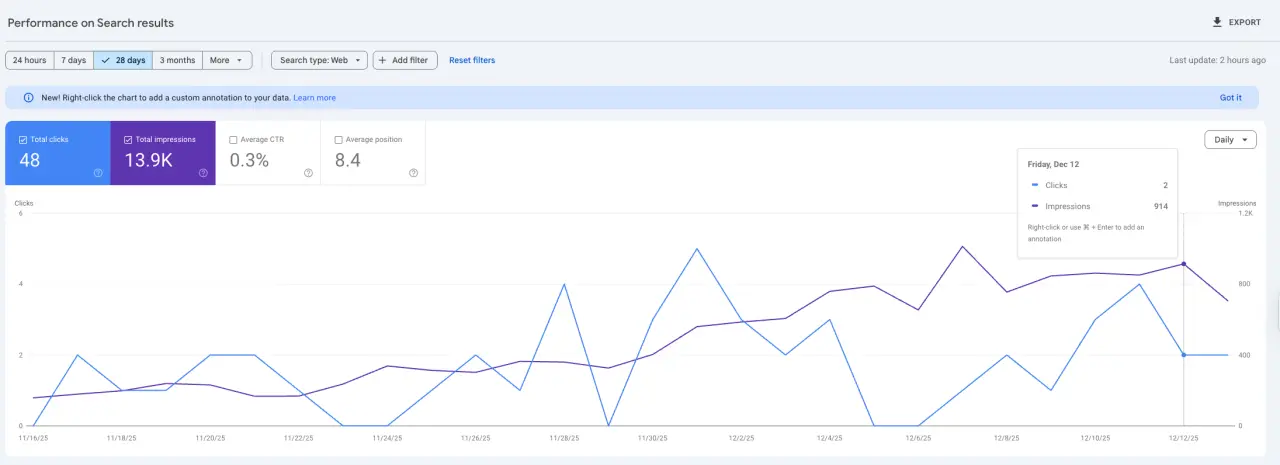
In practical terms, Presta started showing up in queries AI users actually typed, not just generic keyword searches but questions that boil down to explaining concepts, processes, and startup studio patterns. These appearances in AI responses, often marked with source citations, reflect a real shift in how AI search engines treat content that is clear, answer-oriented, and domain focused.
AI Search Signals: Perplexity & ChatGPT Citations
Getting cited by Perplexity and ChatGPT isn’t just a nice badge, it’s a meaningful digital signal in 2026 and beyond. As AI search tools evolve, users expect direct answers backed by authoritative content. Being cited means an AI model chose your page as part of its summarized response, a form of digital authority that goes beyond traditional rankings, leaning into answer engine optimization (AEO) and generative engine optimization (GEO) concepts that prioritize context and structured clarity over just keyword stuffing .

What Made It Work: How Presta Used CopyBeats to Win AI Search Visibility
Presta didn’t “hack” AI search. They did a few simple things consistently, and CopyBeats made those things easy to repeat.
1. CopyBeats enforced answer-first structure
Posts created with CopyBeats were structured to answer real questions early and clearly. Each article led with definitions, clear sections, and scannable takeaways, exactly the kind of content AI systems like Perplexity and ChatGPT can parse, summarize, and cite.
2. CopyBeats made consistency realistic
Instead of publishing sporadically, Presta used CopyBeats to maintain a steady weekly cadence. That consistency sent a strong freshness and relevance signal, which showed up quickly in Google Search Console as rising impressions and broader query coverage.
3. CopyBeats preserved founder voice
Rather than generic SEO copy, Presta’s posts reflected real opinions, examples, and lessons from their work as a startup studio. That founder-led voice gave AI systems richer context to reference, and gave readers content that felt credible, not promotional.
4. CopyBeats layered AI visibility on top of SEO basics
The content still followed solid SEO fundamentals: clear headings, internal links, and query relevance. CopyBeats didn’t replace SEO; it made it easier to execute consistently, which helped AI engines retrieve and interpret the content correctly.
Together, these factors explain why Presta didn’t just see higher impressions in Google Search Console, but also began appearing as a cited source in Perplexity and ChatGPT responses within weeks.
The Bigger Picture for Founders
For founders, increasing impressions in AI search isn’t just about ranking better on Google, it’s about showing up where modern search actually happens. With AI tools becoming first-look research sources for customers, investors, talent, and partners alike, adopting strategies that help content be discovered and cited by AI platforms creates visibility that traditional search alone can’t guarantee.
This case study suggests that with the right approach, even startups without huge content teams can compete for attention in AI search results, and sometimes win.
Frequently Asked Questions
Will AI-generated content sound generic or robotic?
Built prompts and human editing were the antidote to generic output. The case paired AI drafts with founder edits to preserve voice, and the team found that short, specific contextual edits in the text produced more authentic copy.
How long before impressions rise measurably?
Impressions in the experiment began to rise within 6 weeks once text and answer-style content were live. Consistent posting of linked micro-content (LinkedIn) helped accelerate that lift.
What common mistakes should be avoided?
Avoid long unfocused intros, missing schema, and promotional language that reads like an ad. Short, specific answers paired with supporting evidence are easier for AI to surface.
Ready to See Similar Results in Your Company?
Presta’s journey from low impressions to AI search visibility in six weeks shows what’s possible when a startup treats publishing seriously and uses the right support to make it repeatable.
If you want to test how this works for your own company, Start Your First CopyBeat and see how quickly you can generate founder-quality blogs and LinkedIn posts that grow impressions, visibility, and authority online.
Sources
- We Are Presta - Agency positioning and startup-focused service descriptions used as context for audience targeting.
- CopyBeats homepage - Reference for product positioning and content workflows that informed the case study approach.
- AI search visibility now requires content that fulfills user needs and structured clarity, not just ranking signals.
- Ranking in AI search demands semantic clarity and direct answers, not just traditional keyword optimization.